

Enrosadira: The Magic Glow of the Dolomites

Updated: Mar 18
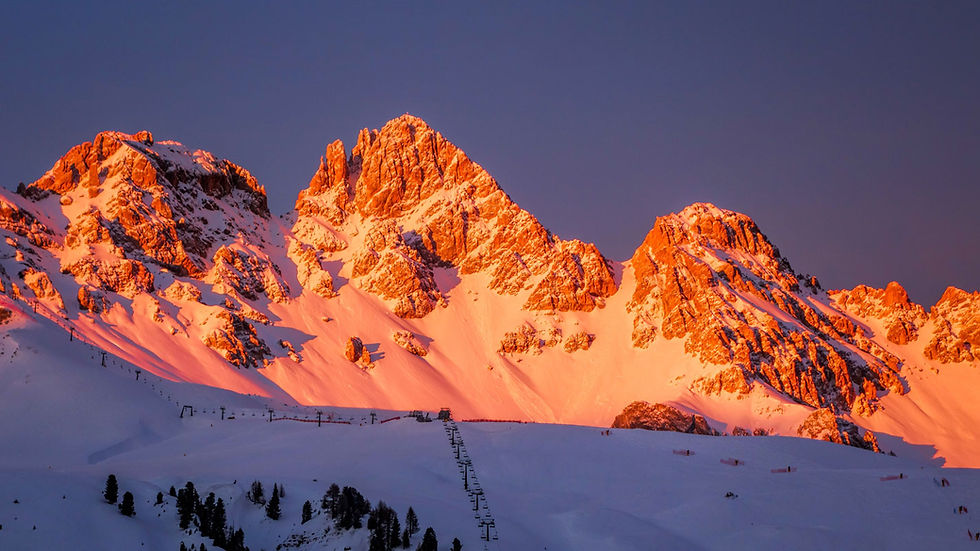
If there is one moment that captures the soul of the Dolomites, it is the Enrosadira. This breathtaking natural phenomenon, where the peaks ignite in shades of pink, orange, and fiery red, has enchanted locals, travelers, artists, and mountaineers for centuries. Whether you’re hiking at sunrise, skiing at sunset, or relaxing in a mountain hut, witnessing the Enrosadira is an experience you will never forget.
But what exactly creates this magic? And why is it unique to the Dolomites? Let’s dive into the stories, science, and curiosities behind this glowing masterpiece.What Is Enrosadira?
The word Enrosadira comes from the Ladin language and means “to become pink”. It refers to the intense alpenglow visible at sunrise and sunset, when the Dolomite peaks catch the light at just the right angle.
While alpenglow exists in other mountain ranges, the Dolomites are special because of their unique mineral composition, especially dolomite rock (calcium magnesium carbonate). This pale limestone reflects warm light in an extraordinary way, producing colors that seem almost unreal.

The Legend Behind the Glow
According to a beloved Ladin legend, the Enrosadira was created by King Laurin, the dwarf king who ruled over a magnificent rose garden on the Catinaccio/Rosengarten massif.
When Laurin’s enchanted garden was destroyed in battle, he cursed it:
“Neither by day nor by night shall anyone ever see my rose garden again.”
But he forgot about the moments between day and night. So at dawn and dusk, the mountains still glow in the colors of his vanished roses.
Magic? Science? In the Dolomites, it’s often both.
When and Where to See Enrosadira
While it can appear on any Dolomite peak, some places are especially known for spectacular Enrosadira displays:
Catinaccio / Rosengarten – the heart of the legend, glowing intensely at sunset
Sella Group – dramatic walls catching the first light of dawn
Tre Cime di Lavaredo – breathtaking at both sunrise and sunset
Odle / Seceda Ridge – magical pink tones at sunrise
Tofane & Lagazuoi – broad and powerful color transitions
Best times:
Tip: The effect lasts only a few minutes, so arrive early and enjoy the full transition.
Curiosities You Probably Didn't Know
1. It’s stronger in winter
Cold air contains fewer particles, making the glow more intense and long-lasting.
2. Photographers call it “golden hour on fire”
Because the Dolomites reflect light more dramatically than other mountain ranges—almost
like a natural HDR effect.
3. Not all colors are the same
Sometimes the glow appears soft and pastel; other times, it’s deep red and dramatic. It depends on humidity, cloud cover, dust in the air, and the position of the sun.
4. It can also happen after sunset
The “afterglow” can be even more spectacular than the main event.
Experience Enrosadira With Dolomagic
The Enrosadira isn’t just something to observe—it’s something to experience.
With Dolomagic Guides, you can witness the glow from the most beautiful spots in the Dolomites:
Sunset viewpoints during guided ski days
Snowshoe hikes in silent valleys far from the crowds
Sunrise tours on panoramic ridges
Guided hikes, via ferratas, and custom adventures with local IFMGA/UIAGM guides
Whether you prefer a calm viewpoint or a full-day adventure, our guides know where Enrosadira shines brightest.
👉 Discover our guided tours and mountain experiences with Dolomagic.
A Moment You Won’t Forget
The Enrosadira is more than a color change—it’s a feeling.
A few minutes each day when the Dolomites reveal their most magical side.
A reminder that nature still has the power to surprise and move us.
If the Dolomites are calling you, let the Enrosadira be your guide.


Che meraviglia! Ho sempre sognato di vedere le Dolomiti durante l'Enrosadira, devo dire che le tue foto sono semplicemente mozzafiato. Ricordo una volta, molti anni fa, di essere stato in Trentino Alto Adige e di aver visto il cielo tingersi di rosa e arancione all'alba, anche se non era ancora l'ora ufficiale del tramonto. Quel momento è rimasto impresso nella mia memoria come qualcosa di magico, quasi irreale. La descrizione che hai fatto di questo fenomeno naturale è così vivida che mi ha fatto sentire di nuovo lì, con l'aria fresca del mattino sul viso. È incredibile come la luce possa trasformare completamente un paesaggio che già di per sé è spettacolare. Mi hai fatto venire una voglia irrefrenabile di…